Consent Culture and Kenya’s Event Spaces: What the tfn Community Learned About Privacy, Trust & Personal Data
Consent Culture and Kenya’s Event Spaces: What the tfn Community Learned About Privacy, Trust & Personal Data
Kandire Gonda, tfn Research Lead
Kandire Gonda, tfn Research Lead
Jan 30, 2026
Jan 30, 2026

tl:dr; How digital storytelling, community spaces, and personal data are reshaping the way Kenyans gather.
#ConsentCulture, #DataProtectionKenya, #EthicalStorytelling, #DigitalPrivacy, #CommunityEvents
Key Takeaways
Consent is not optional; it is the foundation of every event and must be communicated clearly through signage, simple language, and meaningful opt-out choices.
Photos, videos, and recordings are forms of personal data, and organizers must treat them with the same care and sensitivity as any other private information.
Kenya’s Data Protection Act applies to events of all sizes, which means every organizer needs a clear legal basis for collecting personal data, and transparency often meets this requirement.
Consent is specific to the purpose for which it was given, so organizers must ask again if they want to reuse content for a different reason.
Building a consent-first culture is a shared responsibility, with organizers setting expectations and participants contributing to respectful and ethical documentation practices.
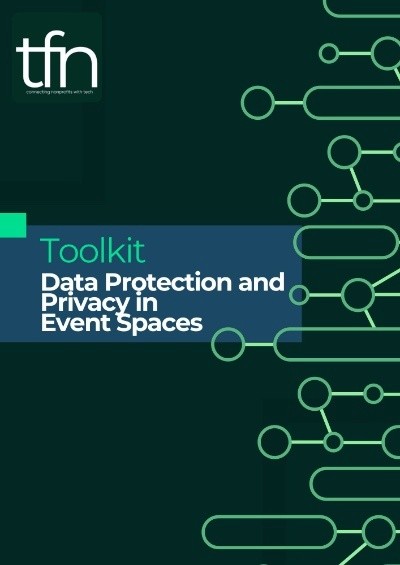
🔗 tfn's Data Protection and Privacy in Event Spaces Toolkit🔗
Opening the Conversation
On November 20, 2025, the tfn community gathered for a webinar on “Consent Culture: Understanding Consent, Privacy and the Power of Personal Data”, a conversation that couldn’t have come at a better time.
Moderated by tfn’s Research Lead, Kandire Gonda, the discussion was framed by noting that Kenya’s event landscape has changed dramatically in recent years: smartphones, photography, videography, and social media are now woven into nearly every gathering and with this shift, questions of privacy and consent have become unavoidable.
Under Kenya’s Data Protection Act and the Constitution, every person has the right to privacy and control over their personal data. Yet, awareness of these rights in everyday settings remains limited. The webinar aimed to bridge this gap by promoting ethical event documentation, lawful handling of personal data, and a consent-first culture.
🔗 tfn's Data Protection and Privacy in Event Spaces Toolkit🔗
Where Law, Creativity, and Community Meet
The session brought together three panelists who saw consent from different angles.
Wambugu Muhota of The Drunken Lectures spoke from the vantage point of someone who curates visual and socially vibrant events full of moments worth documenting. From spontaneous discussions to people expressing themselves in ways that blur the line between social and intellectual, all of it generates curious amounts of personal data, often without people realizing it.
For him, building a consent-first culture meant thinking ahead: telling attendees when photography or recording would happen, offering opt-out options like no-camera zones or wristbands, and avoiding posting images without explicit consent.
Shanice Naisenya, a Data Protection Officer, reminded attendees that personal data isn’t limited to names and emails. Photos, videos, and voice recordings are all personal data, and organizers have a legal duty to explain what they’re collecting and why. She also emphasized that Kenya’s Office of the Data Protection Commissioner (ODPC) could issue fines for misuse — something event organizers often underestimate.
Shanice grounded the conversation in law but in a way that felt accessible rather than intimidating. Her message throughout the session was simple: compliance is not meant to scare people. It’s meant to protect them, and it becomes much easier when legal jargon is translated into everyday language. Consent forms should be clear. Privacy notices should be short. People should walk into an event already understanding what’s expected and what their options are.
Dissi Obanda, founder of Law Down Africa, brought the lens of event design and storytelling. Her experiences organizing the Law Career Fair and initiatives that even at times involve empowering young people and minors, highlighted how sensitive data can be. She explained how consent must be ongoing and intentional, including renewing consent if the purpose of using content changes. She also encouraged organizers to work with their photographers through written Data Processing Agreements (DPAs) to ensure that raw footage is stored safely and ethically.
🔗 tfn's Data Protection and Privacy in Event Spaces Toolkit🔗
Designing Events with Consent at the Center
As the discussion deepened, the panelists were aligned on one principle: consent has to be the foundation—not the afterthought—of event design.
Wambugu described how simple practices could transform an event’s culture. Clear signage, verbal announcements, and consent-enabled registration forms give attendees the information they need to participate fully. Color-coded wristbands or badges can make it easy to identify who is comfortable being photographed and who isn’t. And creating photography-free zones allows people to relax and connect without worrying about where their image might end up.
Shanice expanded on this by explaining that consent is not permanent. If organizers want to use images for a new purpose—say, shifting from event recap to public advertising—they must renew that consent. One decision cannot be stretched endlessly. She also reminded the audience that data must be stored securely. Recordings should be encrypted when possible, and raw footage should not be shared loosely on WhatsApp or email.
Dissi reinforced that all documentation must be viewed as sensitive data. A photo is not “just a photo”—it is personal information that carries meaning. It can place someone in a specific location, reveal relationships, and affect how they are perceived. For her, ethical storytelling requires balancing visibility with protection.
Kandire then raised a concern that many resonated with: how can event documentation stay vibrant without breaching privacy? Wambugu argued the answer is choice: when attendees are informed in advance and offered clear opt-out options, documentation becomes collaborative rather than extractive. He cited color-coded wristbands as a simple way to acknowledge and honor boundaries.
The discussion then turned to legal obligations. Shanice explained that all events, however small, need a legal basis for data collection—usually consent. Compliance, she stressed, doesn’t require heavy paperwork; even a Google Form with a consent box and clear signage suffices. Transparency is the key.
On photographers and videographers, Shanice emphasized Data Processing Agreements to define usage, storage, and ownership. Without them, images risk drifting beyond their intended purpose. She also noted that consent is purpose-specific: footage cleared for an event recap cannot later be repurposed for marketing without renewed permission.
Finally, organizers asked about attendees filming each other without consent. Wambugu admitted this is difficult but urged modeling consent culture—through announcements, respectful norms, and spaces that limit recording. When organizers take privacy seriously, participants are more likely to follow suit.
🔗 tfn's Data Protection and Privacy in Event Spaces Toolkit🔗
The Q&A: What the Community Wanted to know
When the conversation opened to questions, it became clear that Kenya’s event community holds many questions and a genuine curiosity about how consent should work in practice.
The Q&A brought the conversation down to everyday realities, beginning with a question on ‘sharenting’ and the extent to which parents should share images of their children online. Dissi explained that while the law rarely penalises parents, children still have a right to privacy, and decisions about their digital presence should be guided by their best interests. Posting a photo may seem harmless in the moment but can have long-term implications for a child’s identity and safety.
Questions about schools using children’s images for marketing followed closely. Shanice clarified that parents or guardians must give explicit consent, and she referenced a recent case where a school faced fines for failing to do so—a reminder that even well-meaning institutions must follow the law.
The discussion then shifted to political rallies, where attendees asked who controls footage captured at such events. Shanice noted that control lies with whoever determines the purpose of recording—typically a politician’s team or media house—not the person holding the camera.
Finally, participants raised concerns about virtual meeting recordings. The panelists agreed that consent applies online just as it does in physical spaces: organisers should clearly announce recordings, allow people to join anonymously when possible, and adopt internal policies that promote transparency.
The Q&A revealed that consent culture is nuanced, relational, and deeply practical. It requires organizers to lead with clarity, but it also requires participants to be part of the culture-building process.
Key Insight: Building consent culture doesn’t require perfection. It requires intention, and with accessible tools—consent-enabled forms, sample DPAs, signage templates, and privacy tips—organizers can build events where people feel both expressive and protected.
🔗 tfn's Data Protection and Privacy in Event Spaces Toolkit🔗
Closing Thoughts
By the end of the session, one thing was clear: Organizers, participants, and communities all play a role in shaping safer, more ethical spaces, and as Kenya’s event scene continues to expand, consent must move from the margins into the center of how gatherings are designed, documented, and shared.
When organizers communicate openly, renew consent when needed, protect personal data, and design events that give people choices, consent becomes more than a legal requirement—it becomes a culture.
The webinar showed that when law, operations, and storytelling converge, they can spark meaningful change.
Looking ahead, the challenge will be to sustain this momentum, ensuring that every event, from grassroots meetups to national conferences, respects the dignity and privacy of its participants. By fostering awareness and equipping organizers with practical tools, tfn and its partners are helping to build frameworks where consent is not an afterthought but the foundation of community engagement.
🔗 tfn's Data Protection and Privacy in Event Spaces Toolkit🔗
🔗Connect with the author, Kandire Gonda🔗
tl:dr; How digital storytelling, community spaces, and personal data are reshaping the way Kenyans gather.
#ConsentCulture, #DataProtectionKenya, #EthicalStorytelling, #DigitalPrivacy, #CommunityEvents
Key Takeaways
Consent is not optional; it is the foundation of every event and must be communicated clearly through signage, simple language, and meaningful opt-out choices.
Photos, videos, and recordings are forms of personal data, and organizers must treat them with the same care and sensitivity as any other private information.
Kenya’s Data Protection Act applies to events of all sizes, which means every organizer needs a clear legal basis for collecting personal data, and transparency often meets this requirement.
Consent is specific to the purpose for which it was given, so organizers must ask again if they want to reuse content for a different reason.
Building a consent-first culture is a shared responsibility, with organizers setting expectations and participants contributing to respectful and ethical documentation practices.
🔗 tfn's Data Protection and Privacy in Event Spaces Toolkit🔗
Opening the Conversation
On November 20, 2025, the tfn community gathered for a webinar on “Consent Culture: Understanding Consent, Privacy and the Power of Personal Data”, a conversation that couldn’t have come at a better time.
Moderated by tfn’s Research Lead, Kandire Gonda, the discussion was framed by noting that Kenya’s event landscape has changed dramatically in recent years: smartphones, photography, videography, and social media are now woven into nearly every gathering and with this shift, questions of privacy and consent have become unavoidable.
Under Kenya’s Data Protection Act and the Constitution, every person has the right to privacy and control over their personal data. Yet, awareness of these rights in everyday settings remains limited. The webinar aimed to bridge this gap by promoting ethical event documentation, lawful handling of personal data, and a consent-first culture.
🔗 tfn's Data Protection and Privacy in Event Spaces Toolkit🔗
Where Law, Creativity, and Community Meet
The session brought together three panelists who saw consent from different angles.
Wambugu Muhota of The Drunken Lectures spoke from the vantage point of someone who curates visual and socially vibrant events full of moments worth documenting. From spontaneous discussions to people expressing themselves in ways that blur the line between social and intellectual, all of it generates curious amounts of personal data, often without people realizing it.
For him, building a consent-first culture meant thinking ahead: telling attendees when photography or recording would happen, offering opt-out options like no-camera zones or wristbands, and avoiding posting images without explicit consent.
Shanice Naisenya, a Data Protection Officer, reminded attendees that personal data isn’t limited to names and emails. Photos, videos, and voice recordings are all personal data, and organizers have a legal duty to explain what they’re collecting and why. She also emphasized that Kenya’s Office of the Data Protection Commissioner (ODPC) could issue fines for misuse — something event organizers often underestimate.
Shanice grounded the conversation in law but in a way that felt accessible rather than intimidating. Her message throughout the session was simple: compliance is not meant to scare people. It’s meant to protect them, and it becomes much easier when legal jargon is translated into everyday language. Consent forms should be clear. Privacy notices should be short. People should walk into an event already understanding what’s expected and what their options are.
Dissi Obanda, founder of Law Down Africa, brought the lens of event design and storytelling. Her experiences organizing the Law Career Fair and initiatives that even at times involve empowering young people and minors, highlighted how sensitive data can be. She explained how consent must be ongoing and intentional, including renewing consent if the purpose of using content changes. She also encouraged organizers to work with their photographers through written Data Processing Agreements (DPAs) to ensure that raw footage is stored safely and ethically.
🔗 tfn's Data Protection and Privacy in Event Spaces Toolkit🔗
Designing Events with Consent at the Center
As the discussion deepened, the panelists were aligned on one principle: consent has to be the foundation—not the afterthought—of event design.
Wambugu described how simple practices could transform an event’s culture. Clear signage, verbal announcements, and consent-enabled registration forms give attendees the information they need to participate fully. Color-coded wristbands or badges can make it easy to identify who is comfortable being photographed and who isn’t. And creating photography-free zones allows people to relax and connect without worrying about where their image might end up.
Shanice expanded on this by explaining that consent is not permanent. If organizers want to use images for a new purpose—say, shifting from event recap to public advertising—they must renew that consent. One decision cannot be stretched endlessly. She also reminded the audience that data must be stored securely. Recordings should be encrypted when possible, and raw footage should not be shared loosely on WhatsApp or email.
Dissi reinforced that all documentation must be viewed as sensitive data. A photo is not “just a photo”—it is personal information that carries meaning. It can place someone in a specific location, reveal relationships, and affect how they are perceived. For her, ethical storytelling requires balancing visibility with protection.
Kandire then raised a concern that many resonated with: how can event documentation stay vibrant without breaching privacy? Wambugu argued the answer is choice: when attendees are informed in advance and offered clear opt-out options, documentation becomes collaborative rather than extractive. He cited color-coded wristbands as a simple way to acknowledge and honor boundaries.
The discussion then turned to legal obligations. Shanice explained that all events, however small, need a legal basis for data collection—usually consent. Compliance, she stressed, doesn’t require heavy paperwork; even a Google Form with a consent box and clear signage suffices. Transparency is the key.
On photographers and videographers, Shanice emphasized Data Processing Agreements to define usage, storage, and ownership. Without them, images risk drifting beyond their intended purpose. She also noted that consent is purpose-specific: footage cleared for an event recap cannot later be repurposed for marketing without renewed permission.
Finally, organizers asked about attendees filming each other without consent. Wambugu admitted this is difficult but urged modeling consent culture—through announcements, respectful norms, and spaces that limit recording. When organizers take privacy seriously, participants are more likely to follow suit.
🔗 tfn's Data Protection and Privacy in Event Spaces Toolkit🔗
The Q&A: What the Community Wanted to know
When the conversation opened to questions, it became clear that Kenya’s event community holds many questions and a genuine curiosity about how consent should work in practice.
The Q&A brought the conversation down to everyday realities, beginning with a question on ‘sharenting’ and the extent to which parents should share images of their children online. Dissi explained that while the law rarely penalises parents, children still have a right to privacy, and decisions about their digital presence should be guided by their best interests. Posting a photo may seem harmless in the moment but can have long-term implications for a child’s identity and safety.
Questions about schools using children’s images for marketing followed closely. Shanice clarified that parents or guardians must give explicit consent, and she referenced a recent case where a school faced fines for failing to do so—a reminder that even well-meaning institutions must follow the law.
The discussion then shifted to political rallies, where attendees asked who controls footage captured at such events. Shanice noted that control lies with whoever determines the purpose of recording—typically a politician’s team or media house—not the person holding the camera.
Finally, participants raised concerns about virtual meeting recordings. The panelists agreed that consent applies online just as it does in physical spaces: organisers should clearly announce recordings, allow people to join anonymously when possible, and adopt internal policies that promote transparency.
The Q&A revealed that consent culture is nuanced, relational, and deeply practical. It requires organizers to lead with clarity, but it also requires participants to be part of the culture-building process.
Key Insight: Building consent culture doesn’t require perfection. It requires intention, and with accessible tools—consent-enabled forms, sample DPAs, signage templates, and privacy tips—organizers can build events where people feel both expressive and protected.
🔗 tfn's Data Protection and Privacy in Event Spaces Toolkit🔗
Closing Thoughts
By the end of the session, one thing was clear: Organizers, participants, and communities all play a role in shaping safer, more ethical spaces, and as Kenya’s event scene continues to expand, consent must move from the margins into the center of how gatherings are designed, documented, and shared.
When organizers communicate openly, renew consent when needed, protect personal data, and design events that give people choices, consent becomes more than a legal requirement—it becomes a culture.
The webinar showed that when law, operations, and storytelling converge, they can spark meaningful change.
Looking ahead, the challenge will be to sustain this momentum, ensuring that every event, from grassroots meetups to national conferences, respects the dignity and privacy of its participants. By fostering awareness and equipping organizers with practical tools, tfn and its partners are helping to build frameworks where consent is not an afterthought but the foundation of community engagement.
🔗 tfn's Data Protection and Privacy in Event Spaces Toolkit🔗
🔗Connect with the author, Kandire Gonda🔗
tfn community
connect with our community of passionate tech & nonprofit changemakers, collaborate with industry professionals, and actively drive social impact!
Your journey to change the world
Starts Here!
Join tfn and use your superpowers for good! We connect tech innovators with impactful projects that allow YOU to
innovate & grow.
Join Mailing List!
Please provide us with the necessary information, and we will get back to you!
FAQs
When will tfn be launched?
The tfn team is currently building the tech platform. Join our mailing list to be the first to be notified when the details are out. You can also join our Whatsapp community to stay connected.
What is a nonprofit organisation?
A nonprofit is an entity that operates for a collective, public or social benefit without any motive for profit. At tfn, we categorize nonprofits as CBOs, NGOs, INGOs, Bilaterals, Donors and non-formal (unregistered) organizations.
Can I get tfn services before launch?
Yes, you can get tfn services before the platform is launched. Reach out to us on tfn.ke.community@gmail.com for more details.
Tech For Eikyo | 2026. All Rights Reserved
tfn community
connect with our community of passionate tech & nonprofit changemakers, collaborate with industry professionals, and actively drive social impact!
Your journey to change the world
Starts Here!
Join tfn and use your superpowers for good! We connect tech innovators with impactful projects that allow YOU to
innovate & grow.
Join Mailing List!
Please provide us with the necessary information, and we will get back to you!
FAQs
When will tfn be launched?
The tfn team is currently building the tech platform. Join our mailing list to be the first to be notified when the details are out. You can also join our Whatsapp community to stay connected.
What is a nonprofit organisation?
A nonprofit is an entity that operates for a collective, public or social benefit without any motive for profit. At tfn, we categorize nonprofits as CBOs, NGOs, INGOs, Bilaterals, Donors and non-formal (unregistered) organizations.
Can I get tfn services before launch?
Yes, you can get tfn services before the platform is launched. Reach out to us on tfn.ke.community@gmail.com for more details.
Tech For Eikyo | 2026. All Rights Reserved
tfn community
connect with our community of passionate tech & nonprofit changemakers, collaborate with industry professionals, and actively drive social impact!
Your journey to change the world
Starts Here!
Join tfn and use your superpowers for good! We connect tech innovators with impactful projects that allow YOU to
innovate & grow.
Join Mailing List!
Please provide us with the necessary information, and we will get back to you!
FAQs
When will tfn be launched?
The tfn team is currently building the tech platform. Join our mailing list to be the first to be notified when the details are out. You can also join our Whatsapp community to stay connected.
What is a nonprofit organisation?
A nonprofit is an entity that operates for a collective, public or social benefit without any motive for profit. At tfn, we categorize nonprofits as CBOs, NGOs, INGOs, Bilaterals, Donors and non-formal (unregistered) organizations.
Can I get tfn services before launch?
Yes, you can get tfn services before the platform is launched. Reach out to us on tfn.ke.community@gmail.com for more details.
Tech For Eikyo | 2026. All Rights Reserved
tfn community
connect with our community of passionate tech & nonprofit changemakers, collaborate with industry professionals, and actively drive social impact!
Your journey to change the world
Starts Here!
Join tfn and use your superpowers for good! We connect tech innovators with impactful projects that allow YOU to
innovate & grow.
Join Mailing List!
Please provide us with the necessary information, and we will get back to you!
FAQs
When will tfn be launched?
The tfn team is currently building the tech platform. Join our mailing list to be the first to be notified when the details are out. You can also join our Whatsapp community to stay connected.
What is a nonprofit organisation?
A nonprofit is an entity that operates for a collective, public or social benefit without any motive for profit. At tfn, we categorize nonprofits as CBOs, NGOs, INGOs, Bilaterals, Donors and non-formal (unregistered) organizations.
Can I get tfn services before launch?
Yes, you can get tfn services before the platform is launched. Reach out to us on tfn.ke.community@gmail.com for more details.
Tech For Eikyo | 2026. All Rights Reserved